

A developer’s comparison of Adobe Commerce as a Cloud Service (SaaS) and Adobe Commerce on Cloud (PaaS): upgrades, customisation limits, storefront, ops, scaling and compliance.
Popular Posts
 3 min read
 Magento 2: How to invalidate indexer programmatically?
Very often we need to perform the indexing. We either run the index manually or we set the index corn-based to run invalidated indexes automatically which we have set to…
 1 min read
 Magento 2: Add Product Attribute Using Data Patch
Let's Create a custom product attribute using a data patch. Install Data & Upgrade Data is replaced by the Data Patch since Magento 2.3 version. Install Data & Upgrade Data…
 2 min read
 Magento2: How to refresh the shipping method using JS?
Let's refresh the shipping method using JS. We have restored the total section in https://sbdevblog.com/magento-2-how-to-update-the-total-using-js/ Very often, we need to update the shipping method in the cart and checkout page using JS. For example, on…
 1 min read
 Magento 2: How To Remove Product from the categories Programmatically?
We have seen how to add products to categories in a previous blog.https://sbdevblog.com/magento-2-how-to-assign-product-to-categories-programmatically/. Very often, we get the requirement to add or remove products programmatically. For example, we must create…
 3 min read
 Magento 2: How to Create Custom Cache?
Let's see How we can create a custom cache in Magento 2. We are aware of the caching mechanism of Magento 2. We can see a list of the cache…
7 min read
Introduction to ACCS: Adobe Commerce as a Cloud Service
A developer’s look at Adobe Commerce as a Cloud Service: versionless SaaS, out-of-process extensibility, Edge Delivery storefronts and migration tips.
17 min read
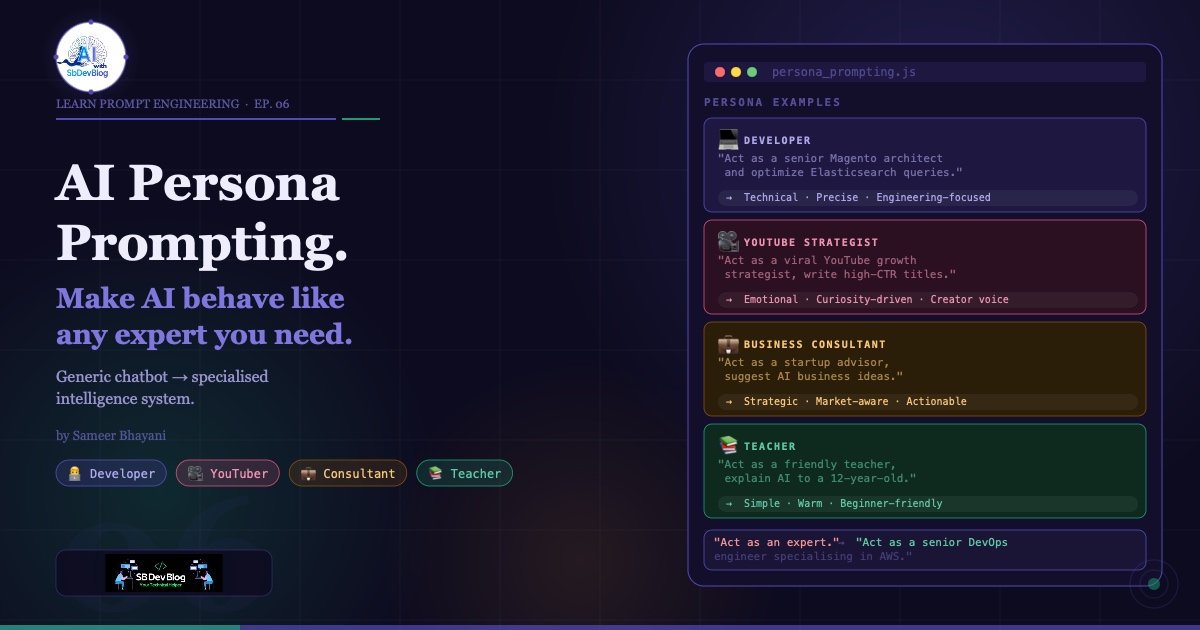
AI Persona Prompting: Make AI Behave Like Any Expert You Need
SB Sameer Bhayani · sbdevblog.com · Prompt Engineering · 8 min read What if the same AI could behave like a senior software engineer, a YouTube strategist, a business consultant, and a friendly teacher — […]
16 min read
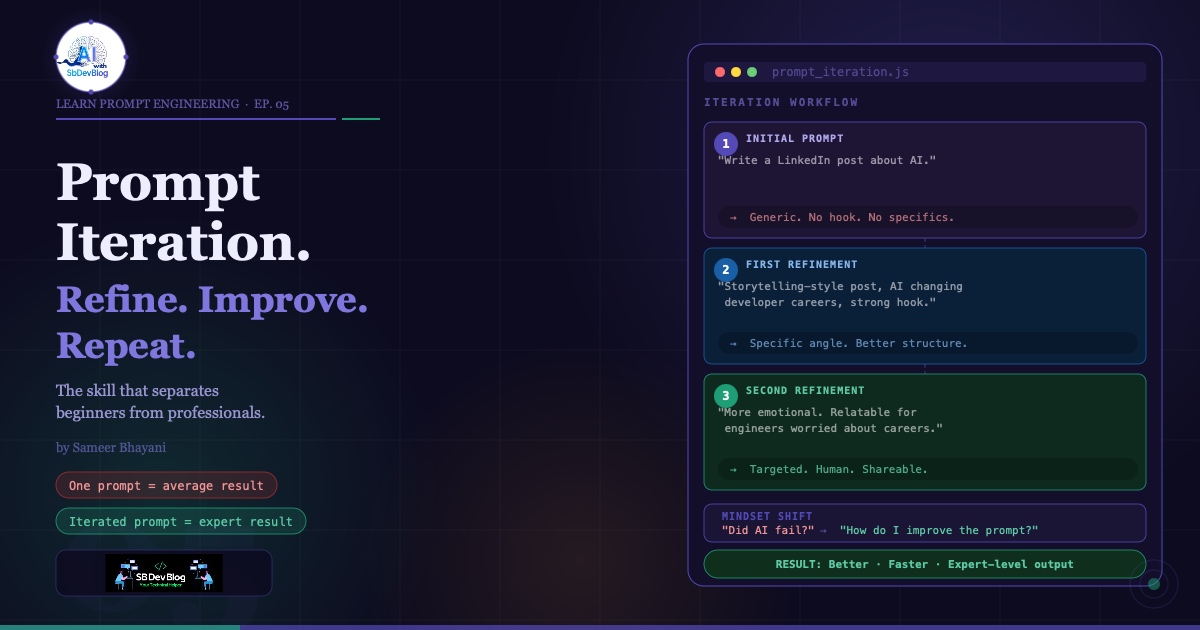
Prompt Iteration: How to Turn Weak AI Responses Into Gold
Learn Prompt Engineering Episode 05 SEO Optimised SB Sameer Bhayani · sbdevblog.com · Prompt Engineering · 8 min read The biggest mistake people make with AI is treating it like Google. They ask one question, […]
13 min read
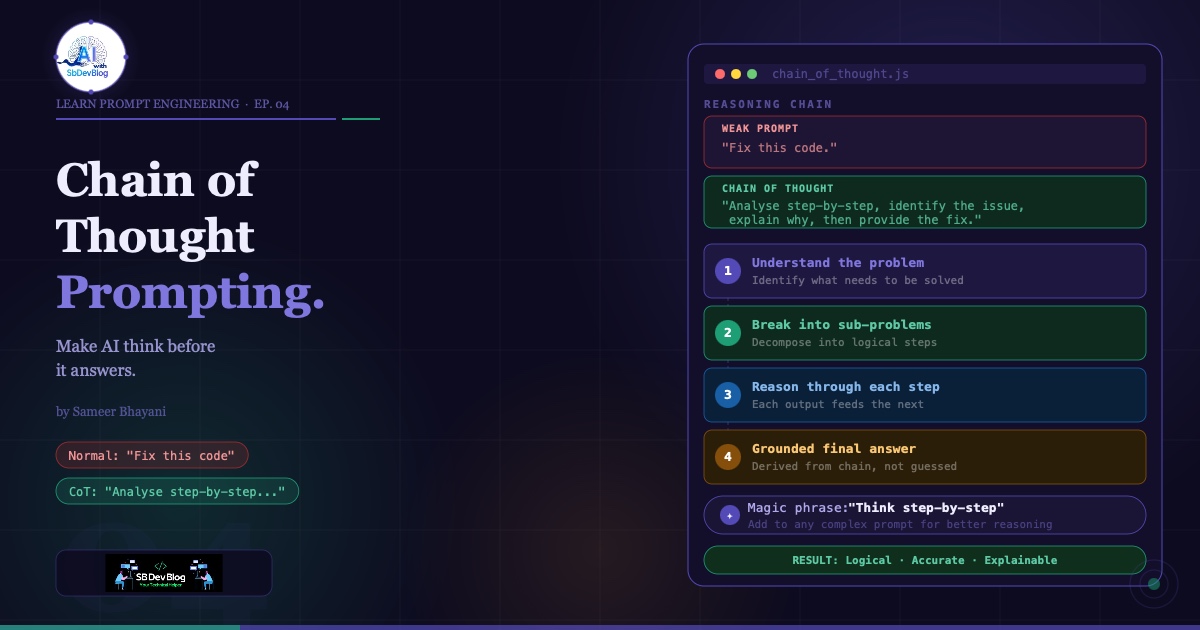
Chain of Thought Prompting: A Practical Guide for Better AI Results
Learn Prompt Engineering Episode 04 AI Prompting SB Sameer Bhayani · sbdevblog.com · Prompt Engineering · 8 min read What if you could help AI work through a complex problem in stages before giving you […]
9 min read
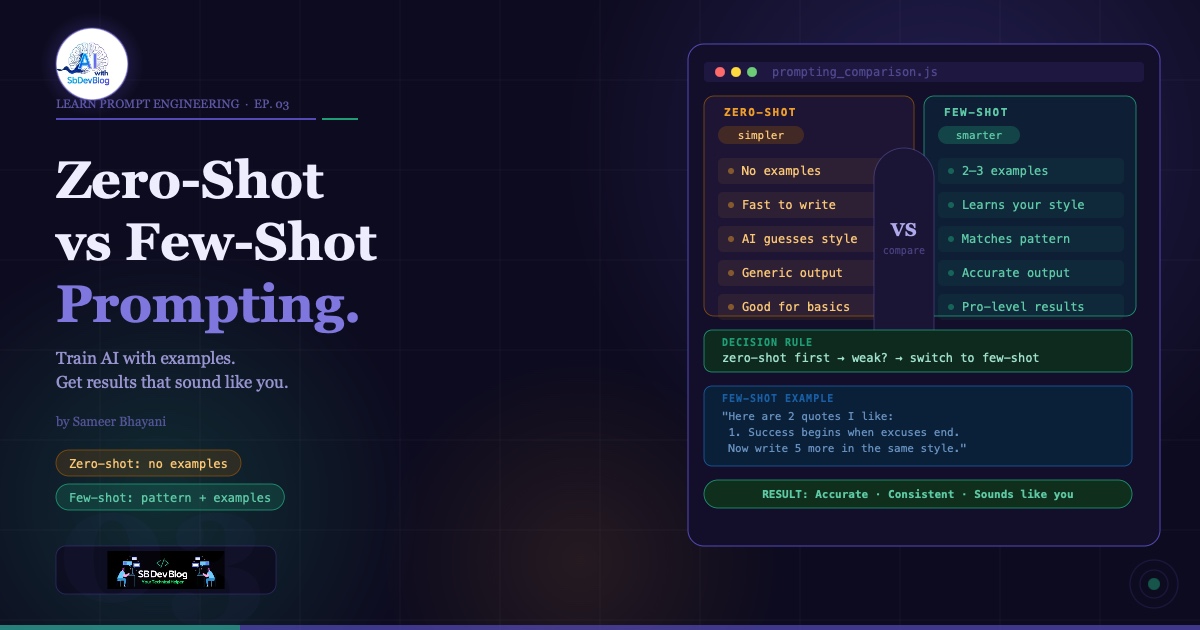
Zero-Shot vs Few-Shot Prompting: The Technique That Makes AI Sound Like You
Learn Prompt Engineering Post 03 SB Sameer Bhayani · sbdevblog.com · Prompt Engineering · 8 min read Most people think AI becomes powerful when you buy better tools. But what if the real power comes […]
13 min read
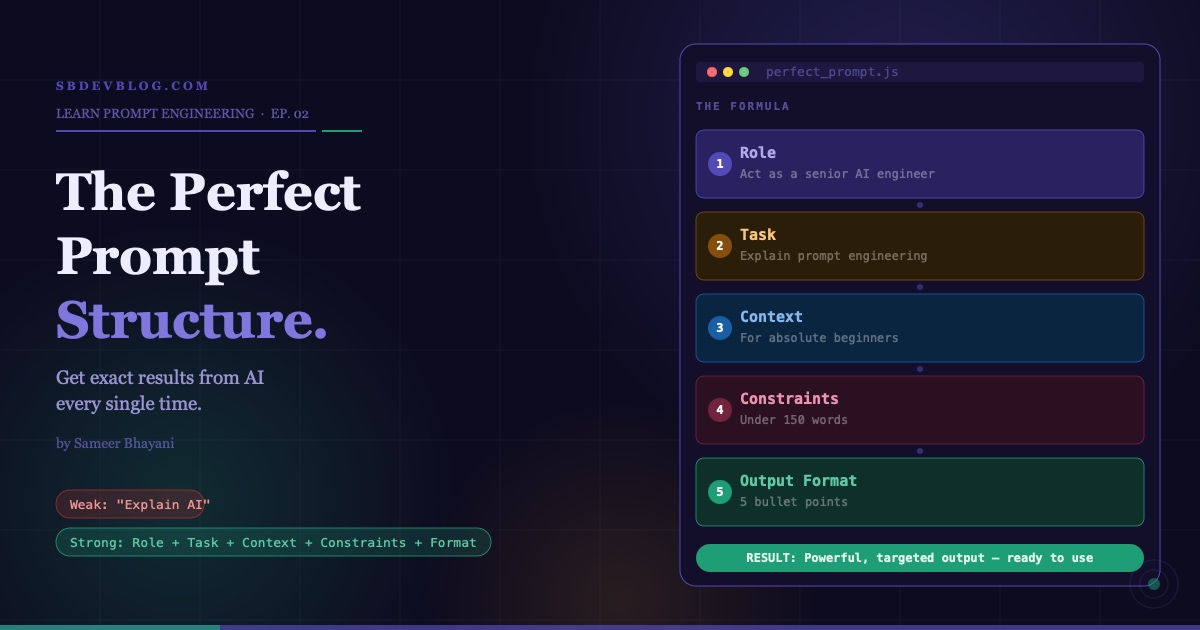
The Perfect Prompt Structure: Get Exact Results from AI
EP02 – WordPress Preview SB Sameer Bhayani Learn Prompt Engineering · sbdevblog.com · Prompt Engineering · 7 min read What if you could ask the same AI the same question — and get a 10x […]
8 min read
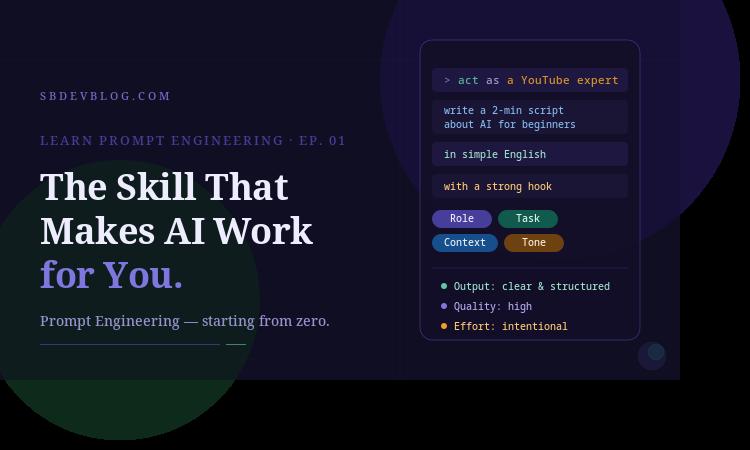
The Skill That Makes AI Actually Work for You
AI can write code, generate ideas, and draft entire articles. But it’s only as powerful as the person behind the keyboard. Here’s the one skill that changes everything. “AI is not the future. Using AI effectively is […]
4 min read

Magento 2 GraphQL: Debugging & Performance Optimization Tips
Magento 2 GraphQL optimization. If you’re building with GraphQL in Magento 2, knowing how to write clean, efficient, and maintainable queries isn’t enough. For a smooth developer experience and optimal performance, it’s essential to follow […]
4 min read

Creating a Custom GraphQL for Magento 2 Products
Magento 2’s native GraphQL API is powerful, but sometimes you need more control or custom functionality that the default product queries can’t provide. That’s why creating a custom GraphQL for Magento 2 products is a […]